Jaewook (Jake) Lee
LLM Post-Training & Evaluation | Applied NLP
Fields:
LLM Post-Training
Evaluation
Applied NLP
Updated on Oct 16, 2026
Technical Skills
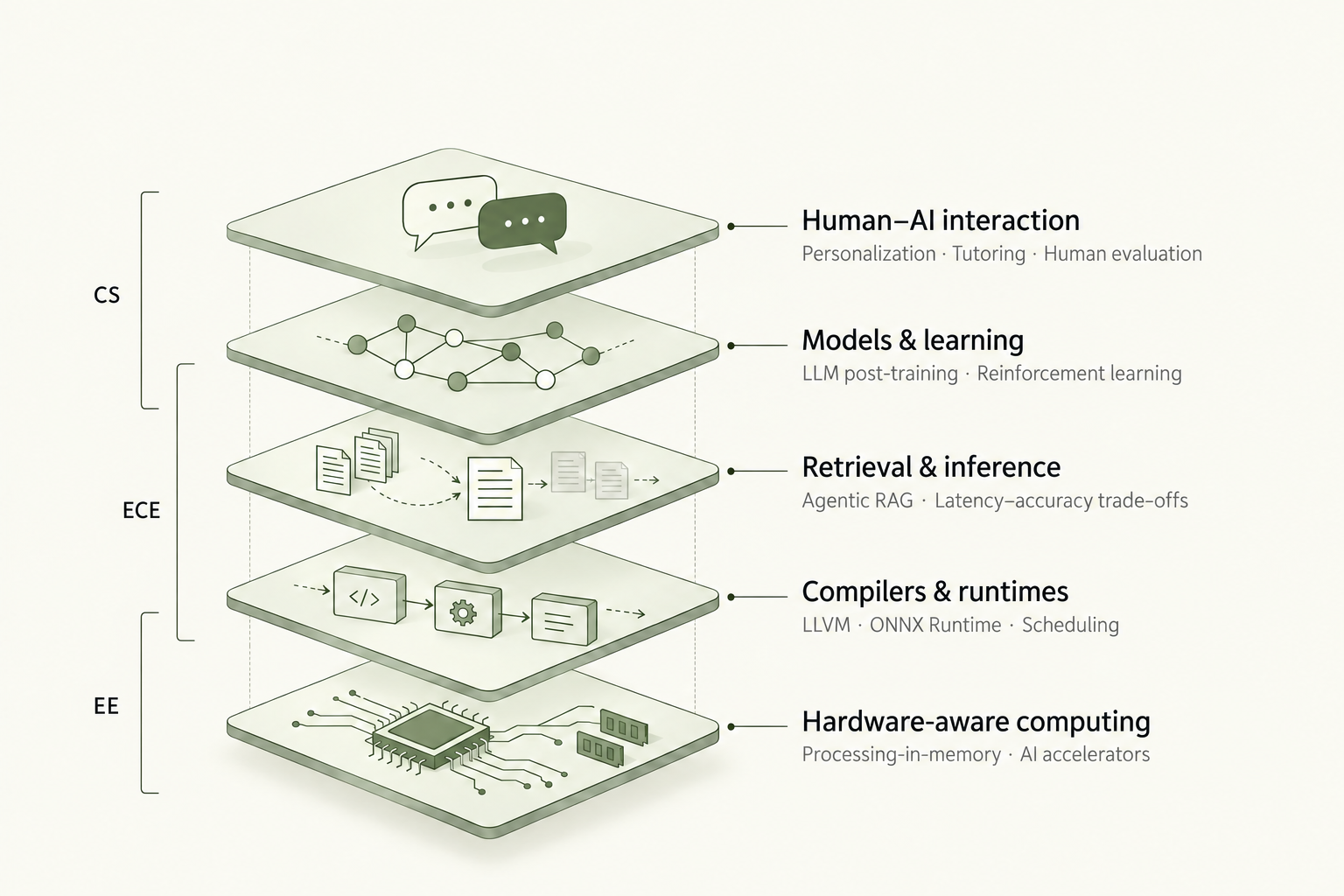
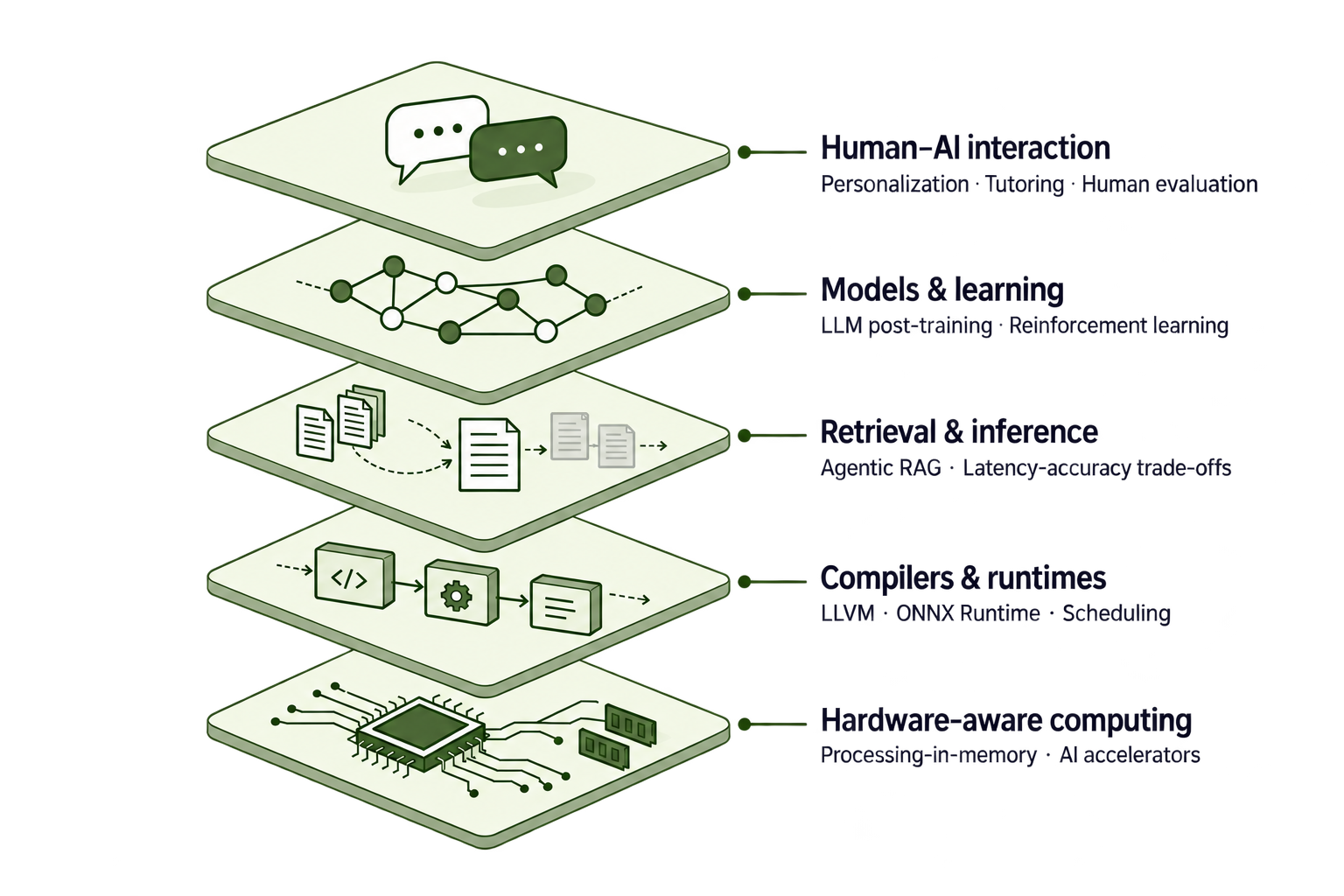
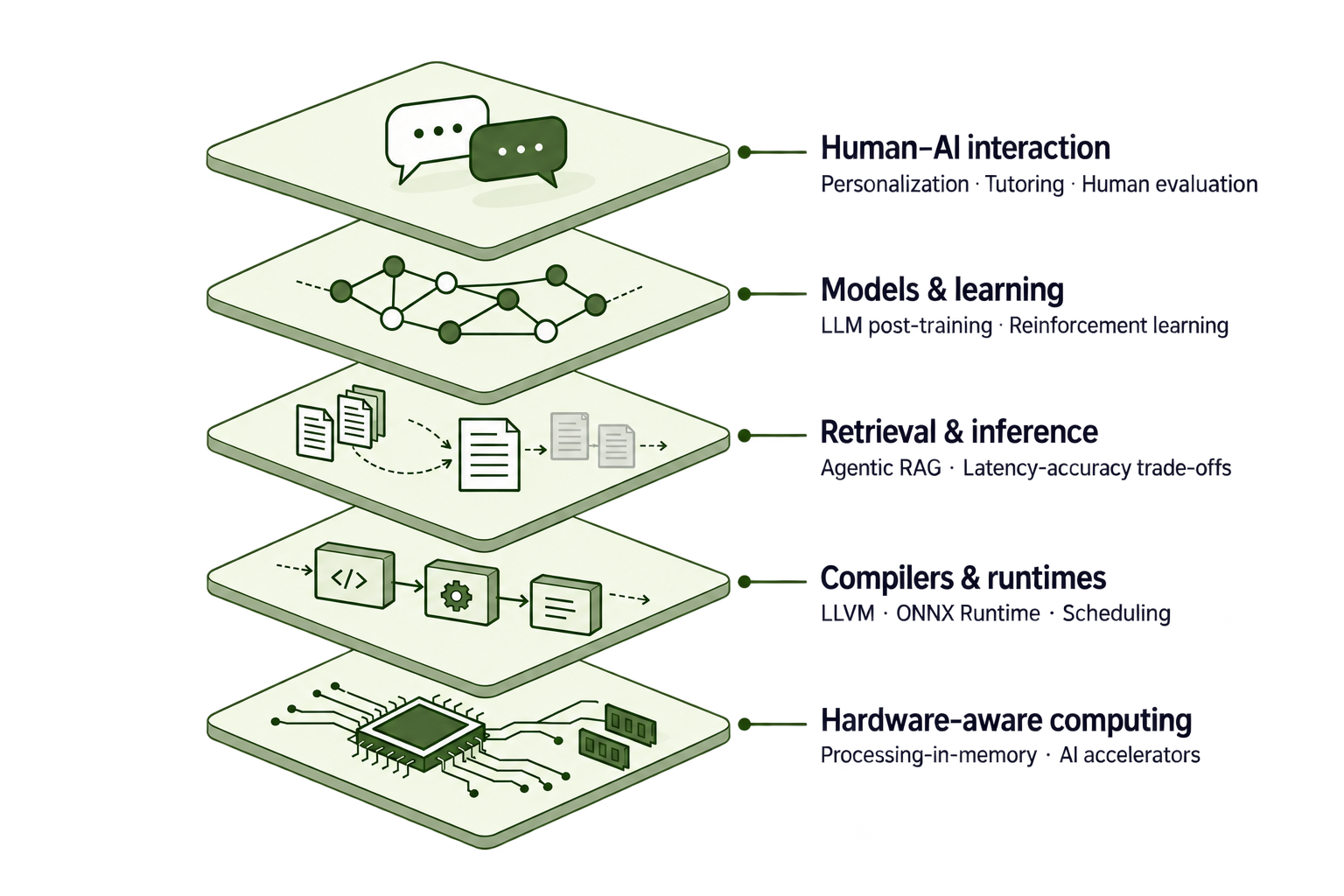
- Core: LLM Post-Training, Reinforcement Learning, Supervised Fine-tuning, Preference Optimization, LLM Evaluation, Agentic RAG, Personalization, Dialogue Systems, User Simulation, Vision-Language Model
- Systems: Multi-Turn Conversational AI, Retrieval Systems, Tool Use, Multi-Agent Systems, Large Language Models, Vision-Language Models, vLLM, RAG Accelerators, AI Accelerators
- Evaluation & Alignment: Human Evaluation, Benchmark Design, Evaluator Design, Reward Modeling
- Engineering: Python, PyTorch, Hugging Face, iOS, React, Go
Experience
Apple
Machine Learning Engineer Intern · Santa Clara, CA
Jun. 2026 – Aug. 2026
- Contributed to multimodal search systems by fine-tuning VLM for Apple's Answers, Knowledge, and Information team; additional technical details limited by confidentiality.
Amazon Web Services
Applied Scientist Intern · Seattle, WA
May 2025 – Aug. 2025
- Designed the evaluation methodology for a production multi-agent AppSec framework, defining task rubrics and assessments for design reviews.
Eedi
Machine Learning Research Intern · Remote, London, UK
Jun. 2023 – Aug. 2023
- Prototyped AnSearch, an LLM-based diagnostic-generation system that combines model outputs with domain expertise to create targeted assessments for identifying student misconceptions.
Selected Research
Agentic RAG, Tool Use & Retrieval Systems
- Developing reinforcement learning and on-policy self-distillation methods to improve spatiotemporal reasoning in VLMs for long-video question answering. (Ongoing project)
- Built an agentic RAG policy that trains LLMs with reinforcement learning to choose retrieval granularity and coordinate keyword/semantic search tools (EMNLP 2026).
- Evaluated latency–accuracy trade-offs in software–hardware co-designed RAG, analyzing how approximate vs. exact nearest-neighbor retrieval affects time-to-first-token and downstream answer quality (Submitted to HPCA 2027).
Post-Training, Dialogue Systems & Model Behavior
- Developing tool-using LLM agents that simulate students by editing executable (SymPy) solution programs to reproduce each student’s reasoning errors, to predict their future mistakes (Ongoing project).
- Built an evaluation framework for LLM-simulated users in tutoring dialogues, measuring linguistic, behavioral, and cognitive realism and showing that surface-level plausibility can mask failures in learning dynamics (ACL 2026).
- Developed a preference-optimization method for deriving tutor-persona steering vectors from human tutor-student dialogues, enabling interpretable control of LLM dialogue behavior without explicit persona prompting (ACL 2026 BEA Workshop).
- Developed an Expectation Maximization-based personalization framework that infers community-level and user-specific latent preferences, enabling LLM generation under cold-start conditions (EMNLP 2025).
Applied NLP, Personalization & Human-Centered Evaluation
- Built an iOS prototype for adaptive LLM generation that personalizes learning content to individual user preferences through interactive feedback (CHI EA 2026).
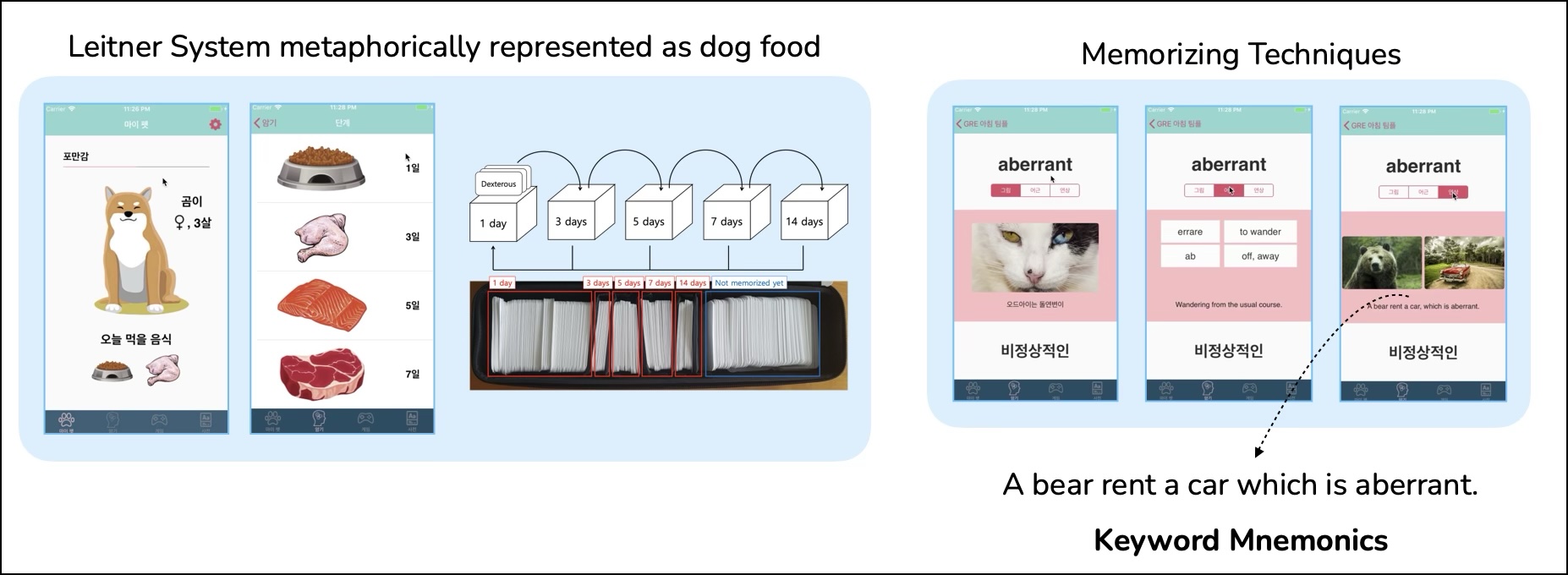
- Led research on phonological similarity algorithms for cross-lingual keyword discovery grounded in user language priors, supporting personalized mnemonic generation (EMNLP 2025).
- Designed evaluation pipelines combining psycholinguistic metrics with human assessment to measure memorability and creative quality in LLM-generated mnemonics (EMNLP 2024).
Education
University of Massachusetts Amherst
Ph.D. in Computer Science · Sep. 2022 – Present
Amherst, MA
- Advisor: Dr. Andrew Lan
- Research: LLM Post-Training and Evaluation, Personalization, Human-in-the-Loop AI
- Mentored student-led ML/NLP research projects, including collaborations with Spotify and Adobe Research
- Passed qualifying exam with distinction (May 2025); M.S. earned Feb. 2026
Korea University
M.E. & B.E. in Electrical and Computer Engineering · Mar. 2013 – Feb. 2022
Seoul, South Korea
- M.E. (Jan. 2019 – Feb. 2022), Advisor: Dr. Seon Wook Kim
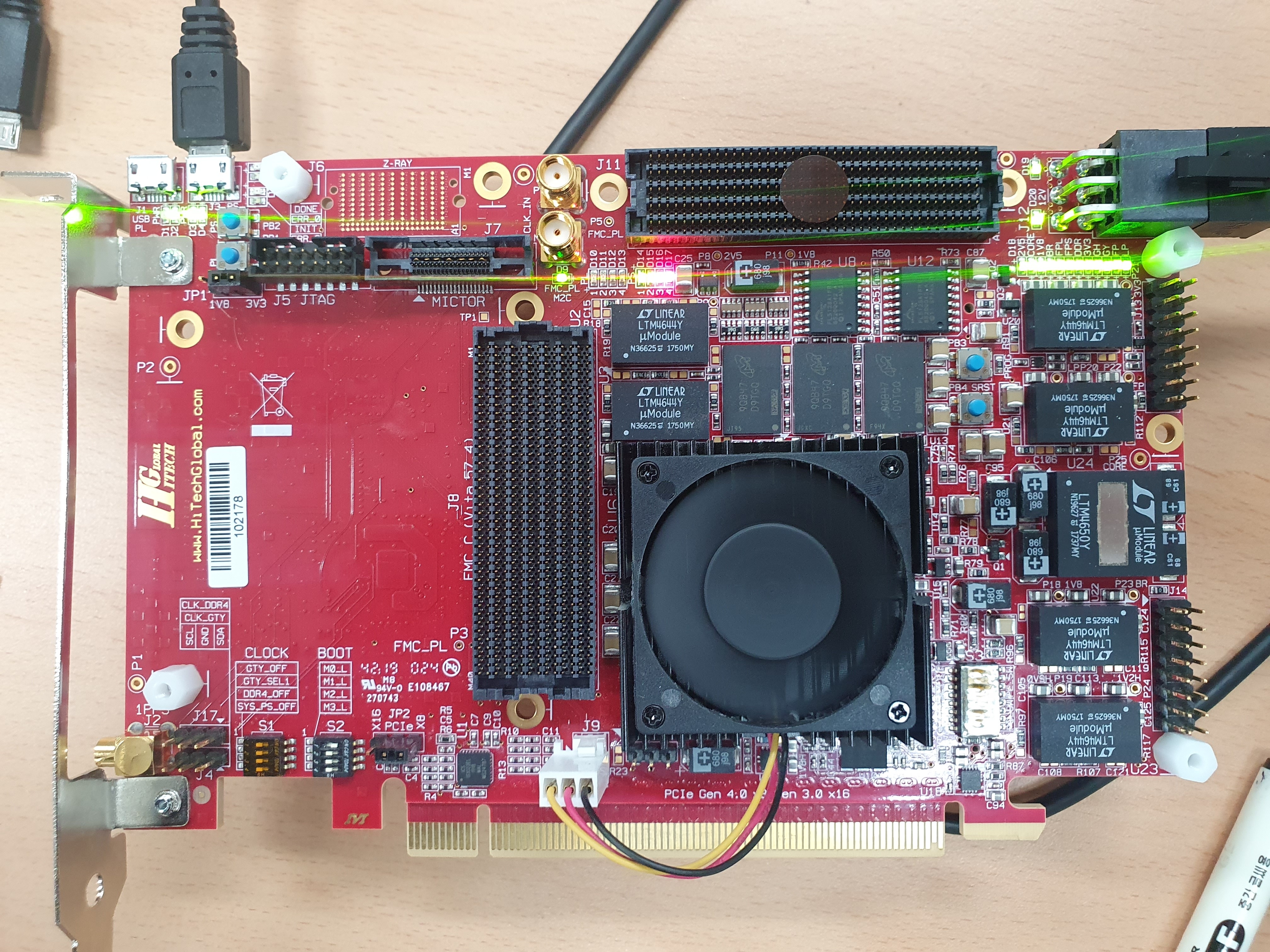
- Research: Compiler Optimization, Processing-in-Memory, AI Frameworks
- Developed ONNX Runtime integration and profiling/scheduling algorithms for PIM-based DNN inference with SK Hynix
- Built NPU compiler tooling for memory-trace extraction and scratchpad-aware LLVM code generation with Samsung
- B.E. (Mar. 2013 – Aug. 2019), Graduated with honors; Mandatory Military Service (21 months)
Awards
2023 – NAEP Math Automated Scoring Challenge Grand Prize
2022 – NeurIPS 2022 Causal Edu Competition (Task 3), 3rd Place
2018 – iOS Application Hackathon Grand Prize, Korea University